
Rainwater & Water
Types of Filtration Methods in a Rainwater Harvesting System
The right filtration depends on how you will use harvested rainwater. Here are the common methods, from simple screens and sand filters to UV and RO.
Key takeaways
- Screens and first-flush diverters remove leaves and roof dirt first.
- Sand, gravel and bag filters remove silt and fine particles.
- UV, chlorination or membranes are needed if water is for drinking.
- Filters only work well if they are cleaned and maintained regularly.
In rainwater harvesting systems, filtration is crucial to ensure the collected water is clean and safe for its intended use. The type of filtration method chosen depends on the quality of the rainwater, the intended application (potable or non-potable), and the specific contaminants that need to be removed. Here are the common types of filtration methods used in rainwater harvesting systems:
1. Pre-Filtration
Pre-filtration removes large debris such as leaves, twigs, dirt, and other particles before the rainwater enters the storage tank. This step prevents clogging and extends the life of the system.
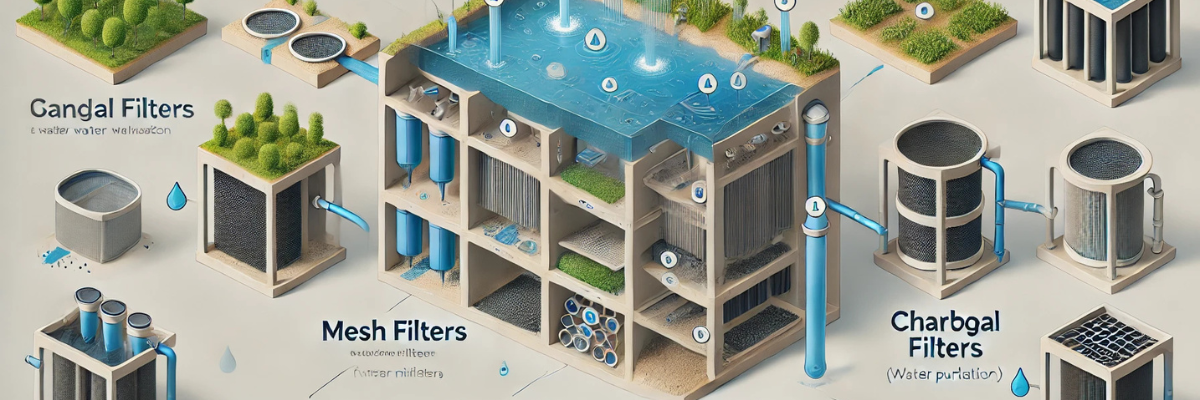
- Gutter Screens: Mesh screens are placed over gutters to block large debris like leaves and branches. These screens prevent debris from entering the downspouts and clogging the system.
- Leaf Filters: Installed in the downpipe or at the top of the tank, leaf filters remove larger debris such as leaves and sticks before the water enters the storage system.
- First-Flush Diverters: These devices divert the initial runoff (usually the first few litres) away from the storage tank, as this water often contains the highest concentration of contaminants like dirt, dust, and pollutants collected on the roof. After this initial "flush," cleaner water flows into the tank.
2. Sedimentation
Sedimentation is a simple filtration method where particles settle to the bottom of the storage tank due to gravity. The clearer water on top can then be drawn for use.
- Sediment Traps or Settling Tanks: In larger systems, a separate sedimentation tank may be installed before the storage tank, allowing heavier particles like dirt or sand to settle at the bottom before the water is transferred to the main tank.
- Calm Inlet: In some systems, a calm inlet is used to allow incoming water to flow gently into the storage tank, minimizing disturbance to the settled particles at the bottom of the tank.
3. Fine Particle Filtration
This type of filtration targets smaller particles like sand, silt, and fine debris.
- Sand Filters: Water passes through layers of sand, which trap fine particles. Sand filters are effective at removing silt, fine debris, and suspended solids from rainwater.
- Gravel Filters: Often used in conjunction with sand filters, gravel filters provide an additional layer of filtration for removing larger particles before the water reaches finer sand filtration.
- Bag Filters: Bag filters contain filter bags made of fine mesh that trap small particles as water flows through them. These filters come in different micron ratings to filter out particles of varying sizes.
4. Activated Carbon Filtration
Activated carbon filters are highly effective at removing organic contaminants, chemicals, and odors from rainwater, especially if the water is intended for potable use.
- Activated Carbon Filters: These filters contain granulated or powdered activated carbon that adsorbs chemicals, volatile organic compounds (VOCs), chlorine, pesticides, and other contaminants. Activated carbon is commonly used in drinking water filtration systems.
- Carbon Block Filters: These filters are made from compressed activated carbon and offer finer filtration compared to loose granular carbon filters. They are often used to remove finer particulates and chemical contaminants from rainwater.
5. UV (Ultraviolet) Filtration
Ultraviolet (UV) filtration is primarily used to disinfect water by inactivating microorganisms like bacteria, viruses, and protozoa.
- UV Disinfection: UV light is applied to rainwater as it flows through a UV chamber, effectively killing harmful pathogens. This method is ideal for rainwater harvesting systems where the water will be used for potable purposes, such as drinking or cooking.
- Combined Systems: UV filtration is often used in combination with other filtration methods (such as activated carbon or sediment filters) to ensure that the water is both physically filtered and disinfected.
6. Reverse Osmosis (RO)
Reverse osmosis is a highly effective filtration method that removes dissolved solids, salts, heavy metals, and some types of microorganisms from water.
- RO Systems: In reverse osmosis systems, water is forced through a semi-permeable membrane that filters out contaminants based on molecular size. This method produces very high-quality water but generates wastewater and requires more energy than other filtration methods.
- RO for Potable Use: RO is typically used when the rainwater is intended for potable purposes and high levels of purity are required. It is often combined with UV filtration for comprehensive water purification.
7. Ceramic Filtration
Ceramic filters use porous ceramic materials to trap bacteria, parasites, and fine particles from rainwater.
- Ceramic Filters: These filters are effective at removing bacteria, protozoa, and suspended solids. They are often used in drinking water systems where physical filtration is necessary to remove pathogens and fine debris.
- Silver-Impregnated Ceramic Filters: Some ceramic filters are impregnated with silver to provide an additional layer of protection against bacteria and microbial growth.
8. Chlorination
Chlorination is a chemical disinfection method used to kill bacteria, viruses, and other pathogens in rainwater.
- Chlorine Treatment: Chlorine or chlorine-based chemicals (such as bleach) can be added to rainwater storage tanks to disinfect the water. This method is effective for both potable and non-potable water systems.
- Chlorine Dosing: In larger systems, automatic chlorine dosing systems may be installed to add the correct amount of chlorine to the water on a continuous or as-needed basis.
9. Slow Sand Filtration
Slow sand filtration is a natural filtration process where water slowly passes through a layer of sand, removing particles, organic matter, and microorganisms.
- Slow Sand Filters: These filters are highly effective at removing turbidity, bacteria, and pathogens. They rely on a biological layer that forms on the surface of the sand, which traps and breaks down contaminants.
- Low Maintenance: Slow sand filters require minimal maintenance but may need periodic cleaning to remove accumulated sediments.
10. Membrane Filtration
Membrane filtration systems use thin membranes with fine pores to filter out microorganisms, dissolved solids, and contaminants.
- Microfiltration (MF): Microfiltration membranes filter out particles larger than about 0.1 microns, including most bacteria.
- Ultrafiltration (UF): Ultrafiltration membranes have finer pores (0.01 microns), capable of removing viruses, bacteria, and other microorganisms from rainwater.
- Nanofiltration (NF): Nanofiltration membranes remove dissolved contaminants like salts and organic molecules, though they do not typically filter out all ions like reverse osmosis.
11. Electrolytic Disinfection
Electrolytic disinfection uses electrical currents to generate disinfectants (such as chlorine) directly in the water to kill pathogens.
- Electrochemical Disinfection: This method is effective at killing bacteria and viruses in rainwater harvesting systems, particularly when used for potable water purposes. It eliminates the need to store and handle chemical disinfectants like chlorine.
Related service
Rainwater harvesting
Recharge pits, rooftop collection, filters and storage tanks for homes and buildings.
Talk to us
FAQs
Questions about this topic
What filter is needed for rainwater used for groundwater recharge?
For recharge, a simple screen or first-flush device plus a sand and gravel filter bed is usually enough to keep silt out of the pit or borewell.
Do I need RO for harvested rainwater?
Usually not, because rainwater is naturally low in dissolved salts. For drinking use, filtration with UV or chlorination is more common, with RO reserved for special cases.
How often should rainwater filters be cleaned?
Clean screens and first-flush devices before the monsoon and after heavy storms. Sand filter beds and cartridges should be cleaned or replaced as needed.
Keep reading
More guides
Items to Consider While Designing a Rainwater Harvesting System
A rainwater harvesting system works well only when catchment, filtration, storage, overflow and maintenance are planned together. Here is what to consider.
Advantages of a Rainwater Harvesting System
Rainwater harvesting saves water, recharges groundwater and reduces runoff. Here are the main benefits for homes, apartments and commercial buildings.
Is Your Home Drinking Water Safe?
Taste, smell and stains can warn you that your home's water needs attention. Here are the signs to watch for, why testing…
Rainwater harvesting
Need a hand with this?
Tell us what you need and we'll call you back to arrange a site visit.
What happens next
- We call you back to understand the job.
- We visit at a time that suits you.
- You get an itemised quote before any work starts.
Prefer to talk now? Call or WhatsApp us.